
Comprehensive Dental Examination
Including evaluation of enamel and gum health.

A More Balanced Smile Designed Around You.
Chips, discoloration, uneven edges, small gaps, and worn teeth can affect how you feel about your smile. Harbor Dental offers custom dental veneers designed to improve tooth shape, color, proportion, and symmetry while keeping the final result natural and personalized.
Dental veneers are thin restorations placed over the front surface of visible teeth to improve their appearance — changing tooth color, shape, length, proportion, or alignment while preserving as much natural tooth structure as possible. One treatment can address several concerns at once, including chipped or worn teeth, uneven shapes, small gaps, deep discoloration, or an asymmetrical smile. Veneers can also be combined with whitening, Invisalign®, or bonding as part of a broader smile plan.
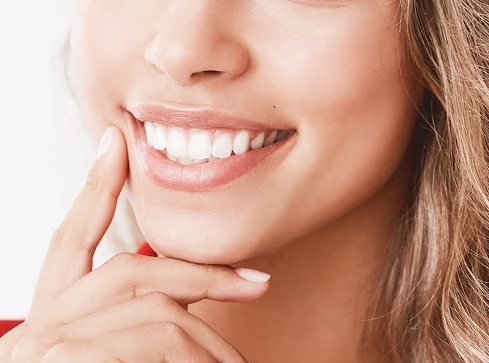
Refines uneven edges, proportions, and visible irregularities.
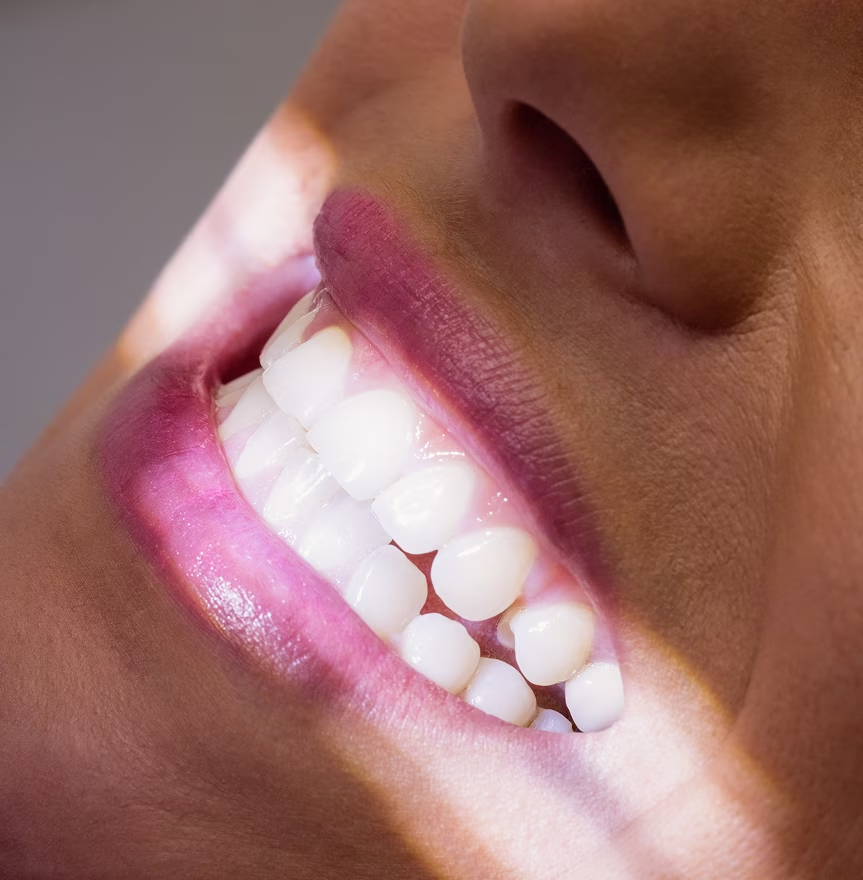
May conceal stains that don’t respond predictably to whitening.

Each veneer is designed around your facial features, bite, smile line, and goals.
Veneers aren’t the right solution for every concern — your dentist will evaluate your teeth, gums, bite, and goals before recommending treatment.

Bring photos or examples of smiles you like — your final design will still be personalized to your own features.


The right veneer type depends on your enamel, bite, cosmetic goals, budget, and the number of teeth being treated.
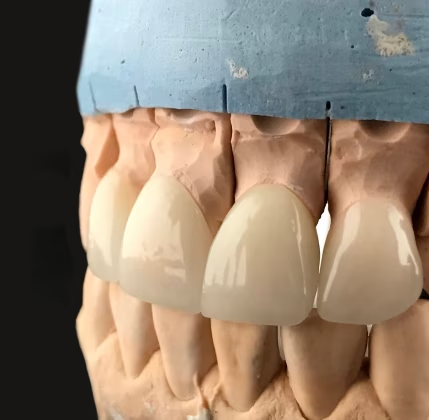
Custom ceramic restorations known for their natural translucency, durability, and resistance to staining — commonly selected for a long-lasting cosmetic result.
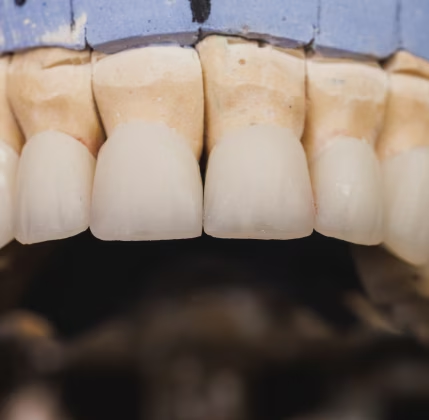
Tooth-colored resin shaped directly on the teeth. May require less treatment time and be more conservative in certain cases.

When clinically appropriate and available, select veneers may be digitally designed, created, and placed during one visit.
Veneers may be appropriate for patients with healthy teeth and gums who want to improve visible cosmetic concerns. Cavities, gum disease, active infection, or significant grinding may need to be addressed before veneers are placed.
You may be a candidate if you have:

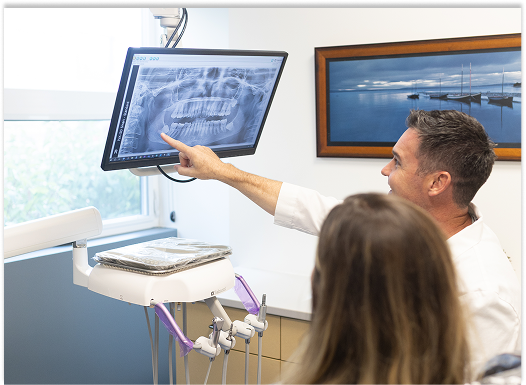
Grinding and clenching can place additional stress on veneers and the supporting teeth. Before treatment, your dentist may evaluate tooth wear, jaw tension, bite relationships, and any previous night-guard use.
A custom night guard or occlusal guard may be recommended after treatment to help protect veneers from nighttime grinding and clenching.
The cost of veneers depends on the material, number of teeth treated, preparation required, and whether additional cosmetic or restorative treatment is needed. Veneers placed primarily for appearance are generally considered cosmetic and may not be covered by dental insurance — our team can provide a personalized estimate before care begins.
Brush twice daily with a soft-bristled toothbrush and floss carefully around each veneer, and keep up with routine cleanings and exams. Avoid using teeth to open packaging or biting hard objects like ice, and wear a protective guard if recommended. Veneers are durable but not indestructible — contact the office if your bite changes or a veneer feels loose or chipped.

Modern dental care with a calm, transparent, family-first approach. Every detail is designed to help you feel confident, comfortable, and cared for.

Veneers are thin restorations placed over the front surface of teeth to improve color, shape, length, proportion, or symmetry — commonly used for chipped, worn, stained, uneven, mildly misaligned, or irregularly shaped teeth.
Veneers are a long-term treatment. Preparation may require removing a small amount of enamel, and once that happens, the treated teeth will continue to need veneers or another restoration going forward.
Lifespan depends on the material, bite, oral habits, hygiene, and whether you grind or clench. The exposed tooth structure around a veneer can still develop decay, so brushing, flossing, and regular visits remain important.
Porcelain veneers are generally more stain-resistant than natural enamel or composite, though surrounding teeth can still change color over time. Veneers themselves don’t respond to whitening products like natural enamel does.
Well-designed veneers can closely mimic natural enamel through personalized shape, shade, translucency, and proportion.
Local anesthetic may be used when preparation is needed. Temporary sensitivity, gum tenderness, or minor bite differences may occur afterward and typically improve as you adjust — contact us if pain persists or worsens, or if a veneer feels loose or uneven.
They may visually improve mild irregularities, but orthodontic treatment is often more appropriate for significant crowding or bite concerns.
Yes — although durable, veneers can be damaged by grinding, biting hard objects, or trauma. A protective guard may be recommended if you grind or clench your teeth.
Veneers are generally considered only after tooth development and gum position are stable. More conservative options — like bonding, whitening, or orthodontic treatment — are often recommended first for teens.
Yes. Harbor Dental welcomes new cosmetic patients in Fort Collins. A consultation is required to determine whether veneers are appropriate.
Whether you want to improve chips, discoloration, worn edges, or uneven tooth proportions, Harbor Dental can help you explore a veneer treatment designed around your smile.