
Comprehensive Dental Examination
Including digital X-rays and 3D imaging when needed.
Rebuild Your Smile. Restore a Stronger Foundation.
A missing tooth can affect how you eat, speak, smile, and feel about your appearance. Harbor Dental offers personalized dental implant care designed to replace missing teeth with stable, natural-looking restorations that support everyday comfort and long-term function.
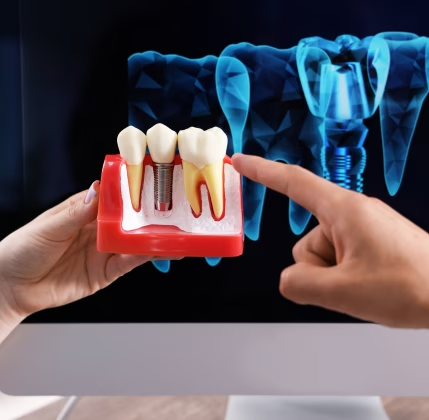
A dental implant is a small post placed in the jaw to replace the foundation of a missing tooth. Once it heals and integrates with the surrounding bone, it can support a custom crown, bridge, or denture. Patients explore implants for reasons ranging from a single missing tooth to an unstable removable denture — implants are one of several tooth-replacement options, and your dentist will compare them with bridges and dentures based on your oral health, goals, and budget.
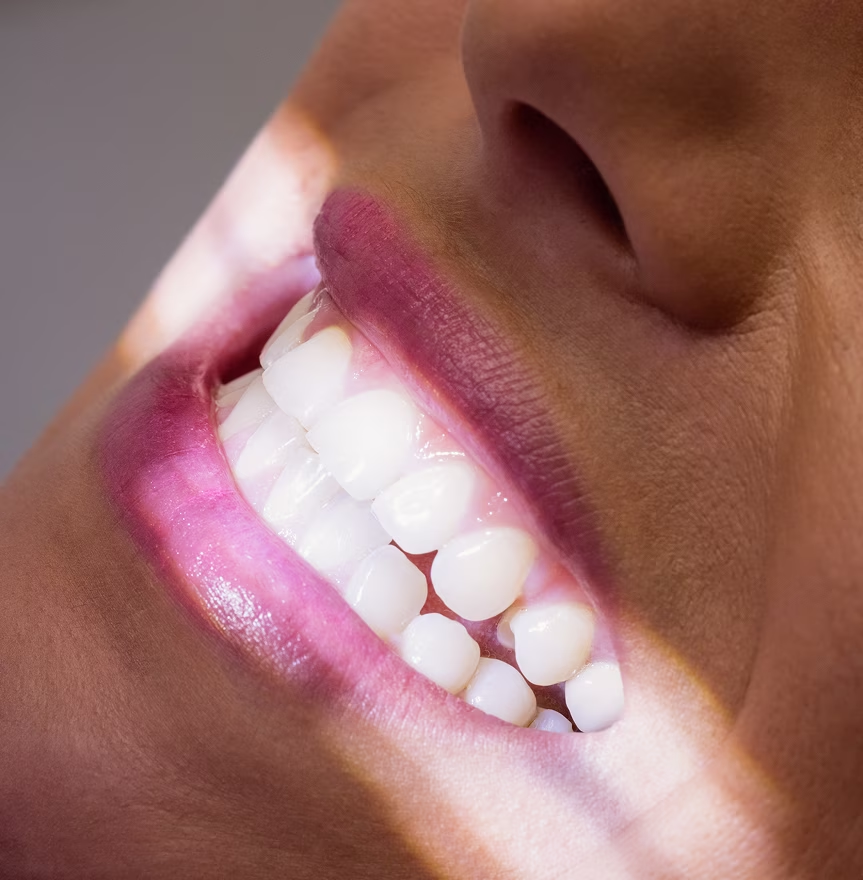
Can replace one tooth, several teeth, or support a full-arch restoration.
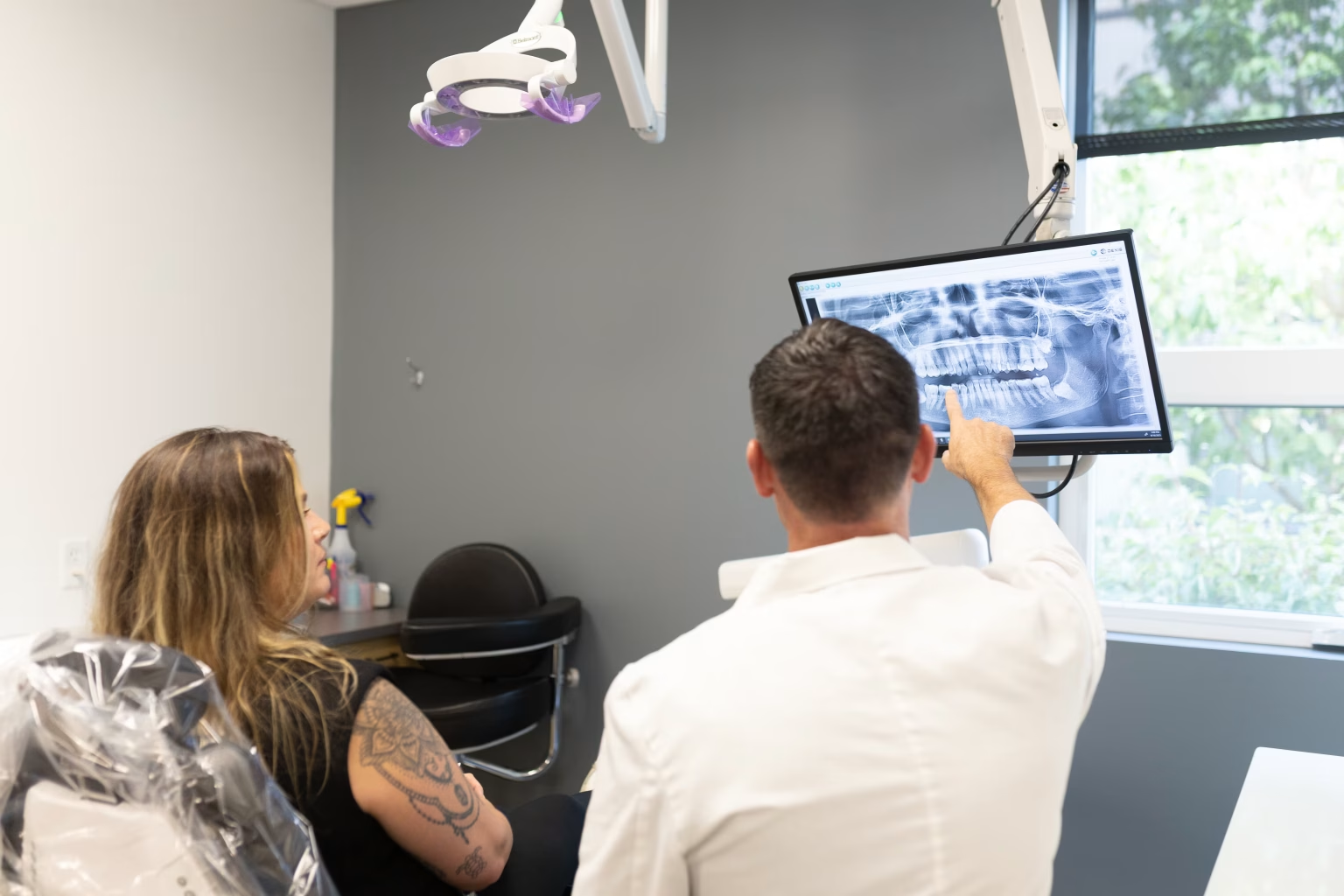
An implant-supported restoration can provide greater stability while eating and speaking.
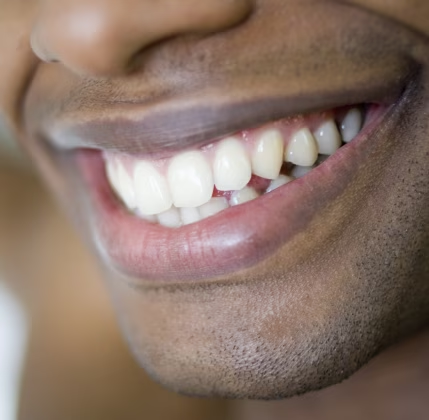
A single implant may replace a missing tooth without requiring adjacent teeth to support a traditional bridge.

Bring details about medical conditions, prescriptions, previous implant treatment, or complications whenever available.

The complete timeline varies based on healing, number of implants, bone condition, and whether additional procedures are needed — treatment may take several months from start to finish.
The right option depends on the number and location of missing teeth, available bone, gum health, bite, and treatment goals.

Supports a custom crown to replace one missing tooth, designed to complement the size, shape, and shade of the surrounding teeth.
Replaces several missing teeth with a bridge supported by implants rather than placing an implant for every missing tooth.
Provides additional stability and support for a qualifying full or partial denture, either removable by the patient or secured more firmly to the implants depending on the design.
Dental implants may be appropriate for adults who are missing one or more teeth and have sufficient oral health and bone support for treatment. Treatment may need to be modified, postponed, or avoided based on active gum disease, inadequate bone, uncontrolled medical conditions, tobacco use, certain medications, or other clinical factors.
You may benefit from a consultation if you:
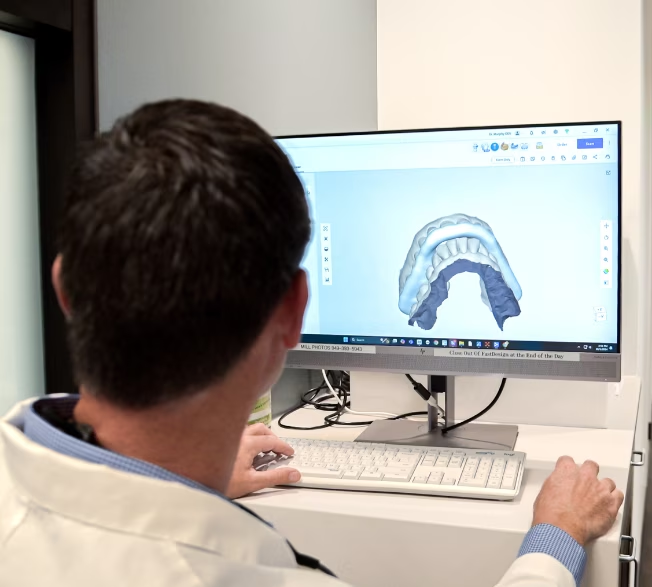
The size, position, and shape of an implant restoration affect how it contacts the opposing teeth and responds to chewing forces. Your dentist may consider implant location, how the upper and lower teeth meet, and existing grinding or clenching habits when planning your restoration.
A night guard may be recommended when grinding or clenching could place excessive pressure on the implant restoration or surrounding teeth.
Pricing depends on the number of implants, restoration type, imaging, surgical complexity, and any bone grafting or extractions needed. Dental insurance may provide partial benefits for certain stages of implant treatment, though coverage, annual maximums, waiting periods, and exclusions vary widely between plans — our team can help estimate expected out-of-pocket costs.
Brush twice daily and clean carefully around the implant using floss, interdental brushes, or water flossers as recommended. Attend regular exams and professional cleanings, avoid smoking and tobacco use, and don’t chew ice or hard objects. An implant itself can’t develop a cavity, but the surrounding gums, bone, and restoration can still develop problems — contact the office if you notice bleeding, swelling, or a restoration that feels loose.
Modern dental care with a calm, transparent, family-first approach. Every detail is designed to help you feel confident, comfortable, and cared for.

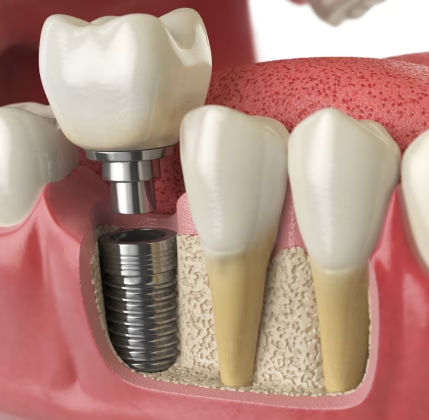
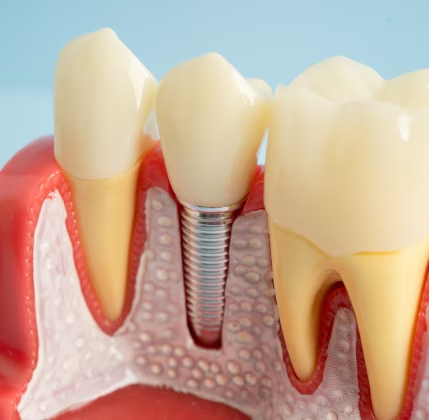
A dental implant is a small post placed in the jaw to support a replacement crown, bridge, or denture. A typical single-tooth restoration includes the implant itself, an attachment called an abutment, and a custom crown above the gums.
Candidacy depends on oral health, bone support, medical history, healing ability, tobacco use, medications, and the ability to maintain the restoration long-term.
The treatment area is numbed before placement, and temporary soreness, swelling, or bruising is common afterward. Contact Harbor Dental if you experience severe or worsening pain, rapidly increasing swelling, heavy or persistent bleeding, fever or signs of infection, difficulty breathing or swallowing, numbness that doesn’t improve as expected, or a loose implant component.
Yes — implants may support a bridge or full-arch restoration when multiple teeth are missing. An implant-supported denture connects to implants for greater stability than a conventional removable denture; some designs remain removable by the patient, while others are fixed and only removable by a dental professional.
Not every patient needs a graft — imaging helps determine whether enough bone is available for placement. Immediate placement after extraction may be possible in selected cases, but infection, bone condition, and tooth location need to be evaluated first.
Longevity varies based on oral hygiene, gum and bone health, medical conditions, tobacco use, bite forces, and regular dental care.
Yes. Healing problems, infection, bone loss, excessive bite forces, smoking, medical conditions, or mechanical complications can affect treatment success.
The implant itself can’t decay, but plaque and inflammation can still damage the surrounding gums and supporting bone. Brush normally and use floss, interdental brushes, water flossers, or other tools recommended for your specific restoration.
Neither is best for every patient. Implants avoid relying on neighboring teeth, while a bridge may be more appropriate based on health, anatomy, timeline, or budget.
Yes. Harbor Dental welcomes new patients in Fort Collins for dental implant and tooth-replacement consultations.
Whether you’re replacing one tooth, several teeth, or exploring greater denture stability, Harbor Dental can help you understand your dental implant options.