

Needs-Based Review
Your dentist or hygienist considers your dental history, symptoms, age, previous images, and current risk factors before recommending any imaging.
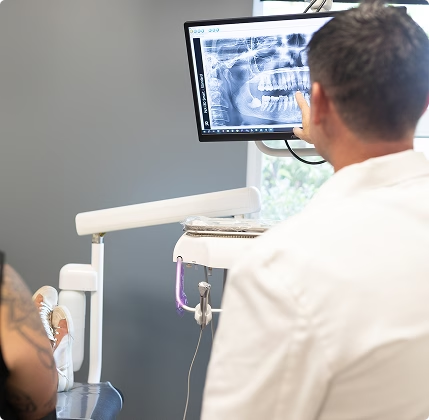
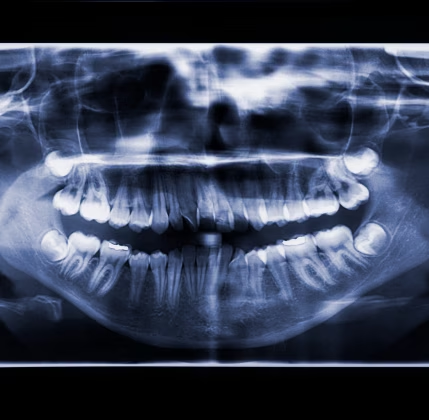
Some dental concerns develop where they cannot be seen during a visual exam. Digital X-rays give our team a detailed view of your teeth, roots, jawbone, and surrounding structures so we can identify problems earlier and plan care more precisely.
At Harbor Dental, digital imaging is recommended based on your individual needs — not a one-size-fits-all schedule.
A visual dental exam provides valuable information, but certain areas — between teeth, below restorations, beneath the gumline — cannot be fully evaluated without diagnostic imaging. Digital X-rays give our team a detailed, immediate view so nothing is left to chance.
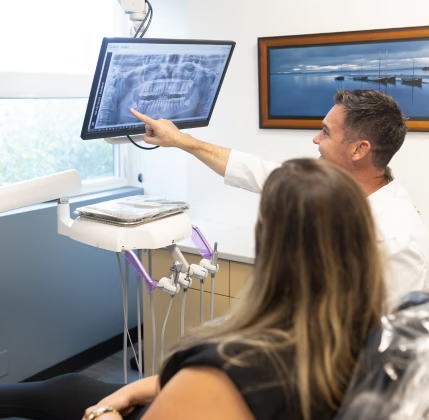
Digital imaging helps identify cavities, infections, and bone changes long before they become painful or visible.
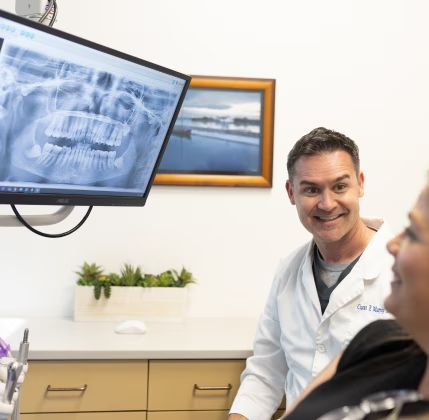
Enlarged, high-resolution images let your dentist evaluate roots, restorations, and bone with precision.
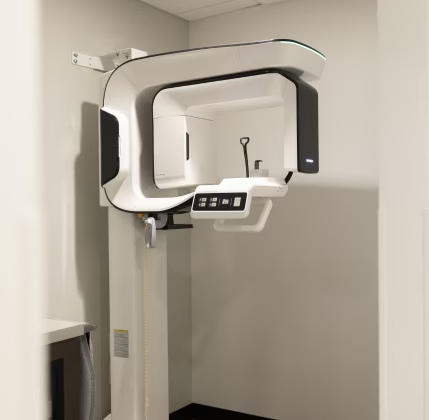
Digital sensors mean faster results and generally less radiation than traditional film.

Every appointment is personalized. The number and type of images taken will depend on what your dental team needs to evaluate.
Not necessarily. Your history and current images determine what’s needed — our team will always recommend the least imaging necessary to diagnose your care properly.
Best suited for patients with recent, diagnostic-quality images from another office. Typically includes:

Recommended when records are incomplete, outdated, unclear, or don’t show the area currently being evaluated. May include:
Note: Before your appointment, you may ask your previous dentist to send your recent X-rays to Harbor Dental.
A visual exam evaluates what’s on the surface. Digital X-rays let us see what’s beneath it — roots, bone, and structures a hygienist or dentist can’t check by eye alone. When we identify a concern, we explain what we see, why it matters, and what options are available. You will never be left guessing about your care.
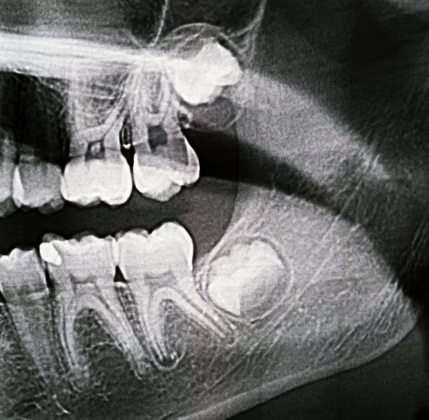
Your imaging may help identify:
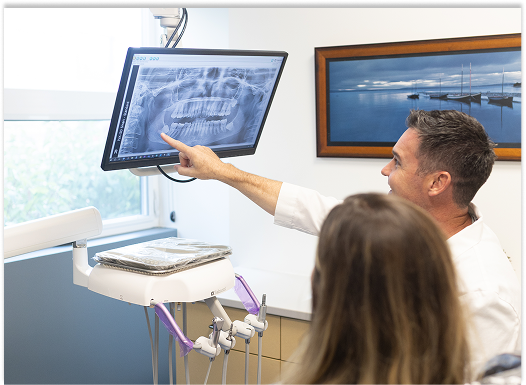
Knowing what X-rays can reveal is one thing — knowing how often you need them is another. Digital X-rays aren’t automatically taken at every appointment; your dentist weighs your history and risk factors to decide what’s actually needed, so you’re never getting more imaging (or radiation) than necessary.
Your recommended imaging schedule may be influenced by:
You may need X-rays sooner if you experience: unexplained tooth pain, swelling near a tooth or gum, a broken or injured tooth, new sensitivity, changes in your bite, suspected infection, or a loose or damaged restoration.
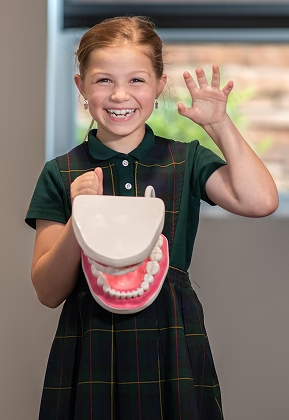
Imaging may help assess cavities between teeth, permanent teeth developing beneath the gums, missing or extra teeth, and early tooth eruption patterns — giving us a clear picture of how your child’s smile is growing.

Imaging may help evaluate impacted teeth, jaw growth, orthodontic concerns, and injuries related to sports or daily activity — supporting changing smiles as they take on more independence.

X-rays support treatment planning for restorative work, periodontal monitoring, root canals, implants, and oral surgery — helping preserve natural teeth and catch changes associated with age, medications, or medical conditions.
Feeling nervous about dental imaging is common, especially with a sensitive mouth or a strong gag reflex. Our team takes time to explain each step, check in with you throughout, and adjust based on your comfort. There is no judgment about your concerns — our goal is simply to help you move forward.
Comfort Options
Modern dental care with a calm, transparent, family-first approach. Every detail is designed to help you feel confident, comfortable, and cared for.

Digital dental X-rays are diagnostic images captured using electronic sensors rather than traditional film. They help dentists evaluate teeth, roots, bone, and other structures that are not fully visible during a clinical exam.
Digital dental imaging uses a low level of radiation and typically requires less exposure than traditional film. X-rays should still be taken only when clinically appropriate.
No. The frequency and type of imaging depend on your age, symptoms, dental history, cavity risk, gum health, and the quality of any existing images.
Individual images take only a few moments to capture. A complete series may take longer depending on the number and type of images needed.
The imaging process should not be painful, but the small sensor used for some images may feel uncomfortable for patients with a sensitive mouth or strong gag reflex. Tell the team if you need the sensor repositioned or require a short break.
Patients may decline recommended imaging. However, X-rays may be necessary for the dentist to diagnose certain conditions or safely provide treatment. Your dentist can explain why a particular image is being recommended.
Recent images may be useful if they show the necessary areas and are of diagnostic quality. Additional images may be needed if your records are outdated, incomplete, or do not show a current concern.
X-rays may reveal cavities, infections, bone loss, impacted teeth, root problems, developmental concerns, damaged restorations, and other conditions that are not always visible during an exam.
Dental X-rays may be used for children when the diagnostic benefit supports taking them. The type and timing should be based on the child’s development, symptoms, and oral-health risks.
Tell your dental team if you are pregnant or may be pregnant. Your dentist will determine whether imaging is necessary and what precautions are appropriate based on your condition.
Whether you’re due for a preventive exam, experiencing tooth pain, or need imaging for treatment planning — Harbor Dental provides thoughtful digital dental X-rays in Fort Collins, along with Invisalign®, same-day crowns, cosmetic dentistry, and calm, confident family care.