

Patient-First Experience
Comfort, clarity, and personalized care at every visit – you set the pace, we hold the course.
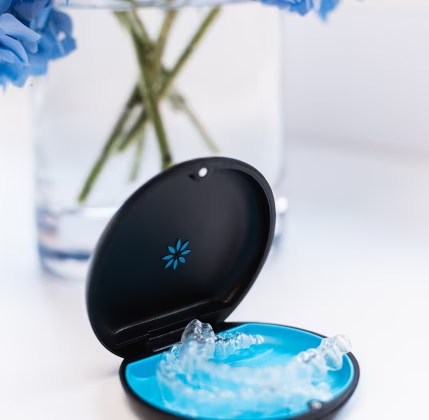
Clear Answers. A More Confident Treatment Journey.
Understanding how Invisalign® works can make it easier to decide whether clear aligners fit your smile, lifestyle, and goals. Below, we’ve answered the most common questions about treatment, daily wear, cost, and options for kids, teens, and adults.
Invisalign® uses a planned series of clear, removable aligners to gradually guide selected teeth into improved positions. Each set is created for your smile and worn according to a personalized treatment schedule.
Invisalign® may be used for selected cases involving crowded teeth, gaps, rotated teeth, teeth that shifted after braces, and bite concerns like an overbite, underbite, or crossbite. Not every orthodontic concern can be treated with aligners alone — a dental evaluation determines whether clear aligners are appropriate.
Treatment starts with a consultation to evaluate your teeth, bite, and goals, followed by a digital scan used to create your personalized treatment plan. You then wear each set of aligners as instructed and attend progress appointments, and after active treatment, retainers help maintain your new tooth positions.
Timeline depends on the complexity of the case, number of aligners, type of tooth movement, age, and consistency of wear. Minor corrections may take less time than treatment involving significant crowding or bite changes — your estimated timeline is reviewed after your digital scan and treatment plan are complete.
It’s common to feel temporary pressure or tenderness when beginning a new set of aligners, which usually improves as the teeth adjust. Contact Harbor Dental if you experience severe pain, sharp edges, a damaged aligner, or a set that doesn’t fit properly.
Attachments are small, tooth-colored shapes bonded to selected teeth to give the aligners additional grip for specific movements — they’re designed to blend in but may be visible at close range. Some patients also need additional aligners (refinements) after the initial series to fine-tune specific tooth positions.
Progress visits let our team evaluate aligner fit, tooth movement, and overall treatment progress. Frequency depends on your treatment plan and how your teeth are responding.
Yes. Retainers are generally needed to help maintain your final tooth positions after active treatment ends.
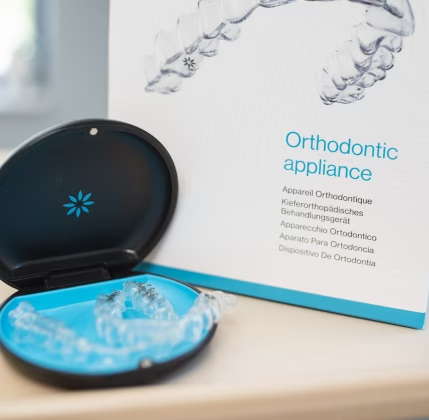
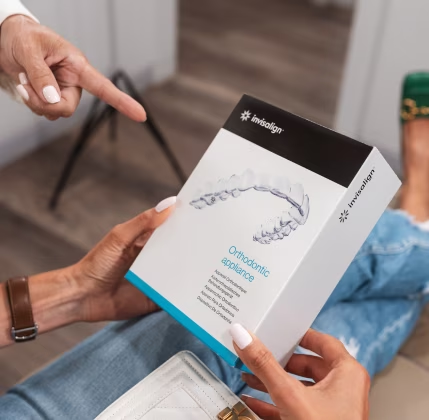
Aligners generally need to be worn most of the day and night, except when eating, drinking anything other than plain water, brushing, or flossing. Removing them too frequently can slow treatment or affect how well your next set fits.
Aligners should be removed for meals, snacks, coffee, and most beverages other than plain water — eating or drinking with them in can damage or stain the material and trap food against your teeth.
Rinse them with cool or lukewarm water and brush gently with a soft toothbrush, using an approved aligner-cleaning product when needed. Avoid hot water and abrasive toothpaste, since heat can distort the material and affect the fit.
Yes, but aligners should be removed when an athletic mouthguard is required.
Yes. Aligners are intended to be worn overnight as part of your recommended daily wear time.
Contact Harbor Dental before moving ahead on your own — you may be instructed to wear the previous set, move to the next set, or order a replacement.
A temporary lisp may occur when treatment begins, but most patients adjust within a short period.
There’s no single starting age — eligibility depends on tooth eruption, dental development, and your child’s ability to follow instructions. Some children with a narrower jaw or significant crowding may need early intervention, like a palatal expander, before aligners are appropriate.
Yes. Selected treatments can be planned while both baby and permanent teeth are present.
It depends on their specific needs — a palatal expander addresses a narrow upper jaw or significant crowding before permanent teeth fully erupt, while Invisalign® aligns teeth that already have enough room. Some children need both, in sequence, which your dentist can evaluate.
There’s no standard upper age limit. Adults may qualify as long as their teeth, gums, and supporting bone are healthy enough for orthodontic movement.
Yes. Selected cases of orthodontic relapse may be treated with clear aligners.
Possibly — existing crowns and restorations must be evaluated and incorporated into your treatment plan. Dental implants themselves can’t be moved orthodontically, but surrounding natural teeth may sometimes be repositioned.
Pricing depends on treatment complexity, duration, number of aligners, and whether additional procedures are needed. You’ll receive a personalized estimate before beginning care.
Some dental plans include orthodontic benefits that may apply, though coverage varies by plan and by age. Financing options, like CareCredit, may also be available for qualifying patients.
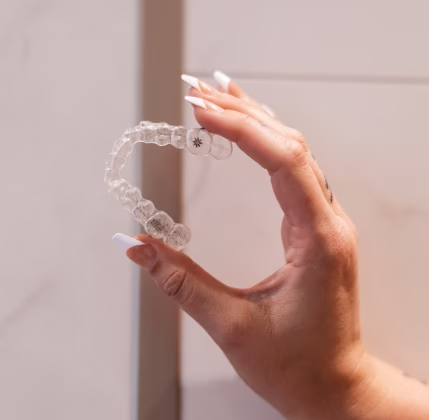
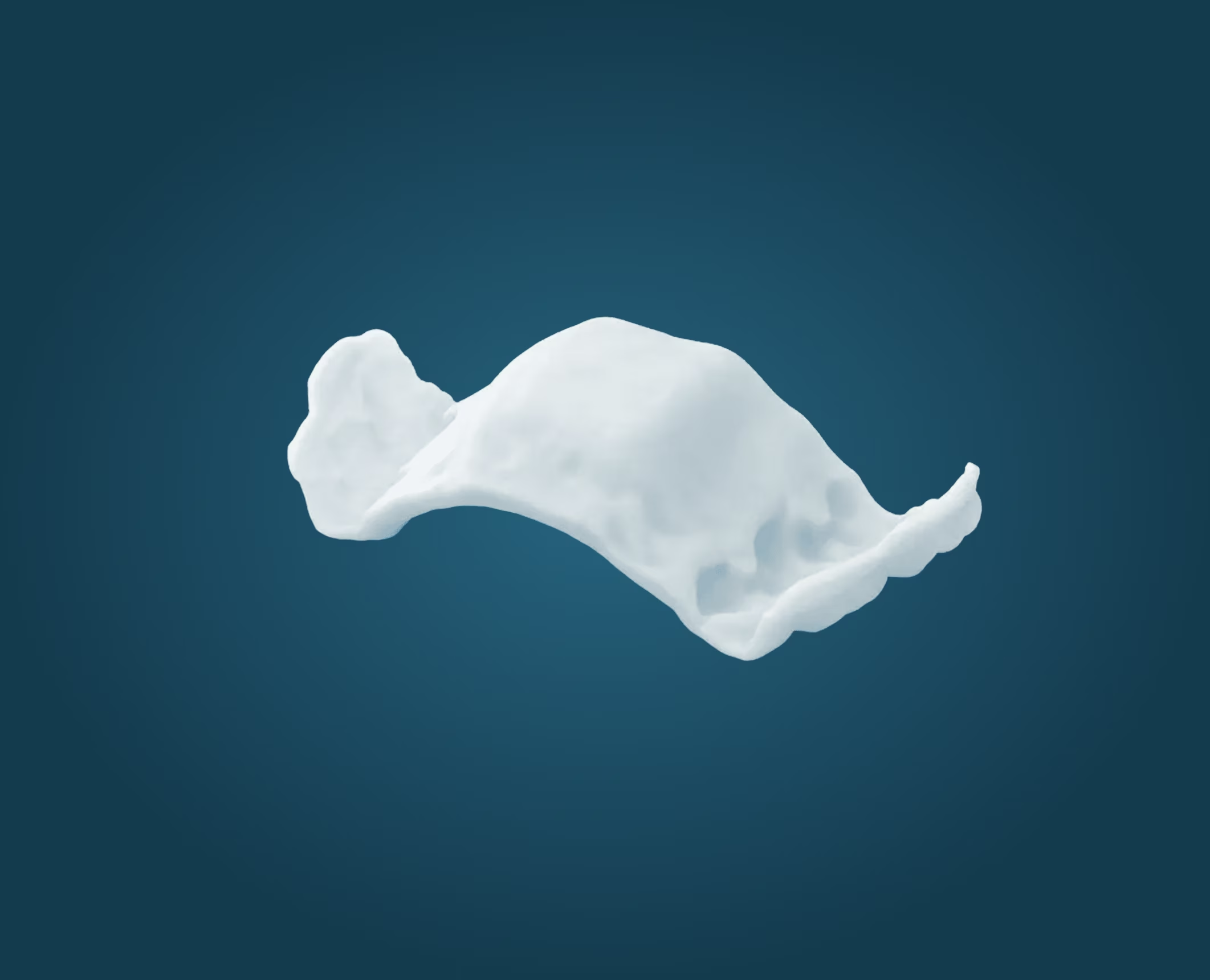
It’s a series of 3D-printed, removable appliances that gradually widen a child’s upper jaw to create space for permanent teeth — a modern alternative to traditional metal expanders that doesn’t require screws or a turning key.
Traditional expanders are metal, stay in place for the full treatment, and require regular manual turning of a screw. The Invisalign system is removable, custom 3D-printed, and doesn’t involve hardware to adjust at home.
Yes — it can be taken out for eating and cleaning, unlike a fixed metal expander.
It applies gentle, gradual pressure through small increments, designed to be more comfortable than a traditional expander. Some mild pressure when starting a new expander is normal.
The American Association of Orthodontists recommends a first orthodontic evaluation by age 7, though the right timing depends on your child’s individual development.
Yes — expanders are designed to be worn full-time, including while eating and drinking, and changed daily or every other day as prescribed.
A Palatal Holder is worn and replaced every 2-4 weeks to stabilize the palate before moving to the next phase of treatment, which may include Invisalign First™ aligners.
Modern dental care with a calm, transparent, family-first approach. Every detail is designed to help you feel confident, comfortable, and cared for.
Whether you’re concerned about crowding, spacing, bite alignment, treatment time, or cost, Harbor Dental can help you understand your options.